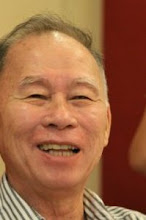
“Matanda” at 70

“Matandain” at 90
As we grow older, we experience physiological changes that slow down the activity of all body parts and organs. Doctors routinely advise the middle age to exercise – which we usually take to mean physical exercise. The brain is usually left out. Also, protective youngsters caution their elders to take it easy saying: “You’re no longer a spring chicken.”  But it is a common saying: IF YOU DON’T USE IT, YOU LOSE IT. So it is with the brain.
But memory loss is not an inevitable part of the aging process
The brain is capable of producing new brain cells at any age, so significant memory loss is not an inevitable result of aging. But just as it is with muscle strength, you have to challenge the easy way out. Your lifestyle, health habits, and daily activities have a huge impact on the health of your brain.
Fact: Brain power can be improved at any age. The human brain has an astonishing ability called neuroplasticity. It enables the brain to adapt and change even into old age. The brain has that uncanny ability to reshape itself in order to increase your cognitive abilities, enhance your ability to learn new information, and improve your memory at any age.

Here are some tips on how to improve your memory:
·        Give your brain a workout. You have to challenge yourself to learn something new. Learn a new language, a new skill like dancing or a sport, writing blogs and playing a musical instrument or a new piano piece. In short, anything that requires mental effort. Keep pushing the envelope; if a new skill becomes too easy, go to the next level. Choose activities that are challenging but at the same time, enjoyable and satisfying.

·        Don’t skip the physical exercise. Physical exercise helps the brain stay sharp as it increases oxygen to the brain and reduces the risk of disorders that lead to memory loss such as diabetes and cardiovascular disease. It also reduces stress hormones and plays an important role in neuroplasticity by boosting growth factors and stimulating new neuronal connections.
Aerobic exercise is good for the brain, so choose the activities that keep your blood pumping. In general, what is good for the heart is great for the brain.
But, there are cases when exercise causes our leg muscles to ache. If you succumb to it and fail to use your legs, your muscles grow weaker and weaker and you start to lose your balance and risk being unable to walk.
·        Get your ZZZZs. Sleep is critical to learning and memory as it is necessary for memory consolidation with the key memory-enhancing activity occurring during the deepest stages of sleep. 95% of adults need between 7.5 and nine hours of sleep.
Sleep experts advise that we should go to bed at the same time every night and get up at the same time each morning. We should avoid all screens for at least an hour before bed. The blue light emitted by TVs, tablets, phones, and computers triggers wakefulness and suppresses sleep hormones, such as melatonin, that make you sleepy. And most of all, cut back on caffeine as it may interfere with sleep at night.
·        Make time for friends and have healthy relationships. Research shows that having meaningful friendships and a strong support system is vital not only to emotional health but also to brain health. In a recent Harvard study, researchers found that people with the most active social lives had the slowest rate of memory decline.
 ·        Have a good laugh. Laughter is the best medicine and that holds true for the brain and memory. Listening to jokes and working out punch lines activate areas of the brain vital to learning and creativity.
 ·        Keep stress in check. Stress is one of the brain’s worst enemies. Chronic stress destroys brain cells and is linked to memory loss.
 ·        Eat a brain-boosting diet. Take virgin coconut oil which is now being hailed as a  miracle brain food. Also get your Omega 3 fatty acids that are so beneficial for brain health. Like cold water fatty fish such as salmon, tuna, halibut, trout, mackerel, sardines. Non-seafood items include walnuts, ground flaxseed, flaxseed oil, winter squash, kidney and pinto beans, spinach broccoli, and soybeans. 
Eat more fruits and vegetables as they are packed with antioxidants that protect the brain cells from damage.
 But cut back on diets high in saturated fats, such as red meat, whole milk, butter, cheese, cream, and ice cream that may increase your risk of dementia.
 ·        Identify and treat health problems. There are many diseases, mental health disorders, and medications that interfere with memory. Cardiovascular disease and its risk factors, such as cholesterol and high blood pressure, diabetes, hormonal imbalance, thyroid imbalances, depression, and some medications, can cause cognitive impairment, forgetfulness, sluggish thinking, and confusion, and memory loss. 

Leave a comment

FAVORITE WHIPPING BOY

 With some quotes from Boo Chanco
Patience is supposed to be a virtue. But as far as the Filipino people are concerned, it has long been proven that patience is a vice. Patience never got us anywhere through three centuries of Spanish rule, half a century of the Americans and some 60 years with our home grown tyrants.
I am not sure if the pre-Spanish tribesmen in these islands that became the Philippines were naturally patient. But I am almost sure the kind of patience we have today has colonial roots. It was nurtured by the Spaniards and later, the Americans and our Ilustrados to subdue our masa for easier exploitation.
Perhaps our poor are resigned to the realities of their miserable existence. They live by the day and are ready to vote for the source of their next meal.
This should be embarrassing to all of us who take pride in being the only Christian nation in our region. But it isn’t. We, too, are resigned to this fact of life. Hunger and poverty and self-flagellation are in the realm of background noise for most of home-based Pinoys.
There are some 10 million Pinoys abroad and more former OFWs who have absorbed the varied cultures of their adopted communities. They are experiencing the good and bad life in other countries.
These are the people who would thoughtlessly parry criticism about inconveniences and inefficiencies in our country by saying: “This is the Philippines. What do you expect.”
This irresponsible high-handed attitude is shared by many of our overseas countrymen including media practitioners. You can just read broadsheet’s opinion pages.
So, how can the people rid themselves of decades old obstructive “patience” – when even “responsible” media succumbs to irresponsible impatience?
The country needs everyone’s cooperation to erase negative patience and to push significant gains already achieved. Let me name some:
·         The high GDP numbers per quarter which can only be achieved by effective economic reforms.
·         The increased ranking of the country in the Global competitive Index from 85th place to 65th place.
·         The record-breaking growth of Foreign Direct Investments to 2.8 billion dollars, outpacing Malaysia, Indonesia, Thailand and Singapore.
·         The record-high performances of Philippines Stock Exchange.
·         The lowest recorded inflation rate in five years and lower than the average inflation rates in Indonesia, Singapore, India, and Vietnam.
·         The Fitch Ratings and Standard & Poor’s conferred investment grade status (BBB-) to the country and the Japan Credit Rating Agency upgraded the country one notch above investment grade (BBB).

Critics may say that all of these achievements in numbers are nothing if the economic growth can't be felt by ordinary Filipinos, yes that's true but the task is not easy as they make it appear. They should not expect the government to give out mansions and jobs directly to anyone who hasn't even gone to school.

Lifting the poor people of our country needs more than just saying the "Erap Para Sa Mahirap" or "Gaganda ang Buhay kay Binay" slogan. It starts with concrete economic plans and patiently doing the right things to implement them.

As the experts have said, it needs at least 10-15 years of sustained GDP at 6% - 7% of the Philippines to make the masses feel the economic growth.

But first, to get to that point we need to support the efforts of the government which are good. When something good is done, we need to support it and drop the opposing political agendas we have. It is the only way to change our decades old patient complacency.

We need to drop crab mentality and give credit where credit is due. 

Leave a comment

Cancer’s Kryptonite?

STEVIA
from Live Science of Lauren Cox
        Stevia is perhaps unique among food ingredients because it is most valued for what it doesn't do. It doesn't add calories. Unlike other sugar substitutes, stevia is derived from a plant.
But the prized species, Stevia rebaudiana (Bertoni), grows in Paraguay and Brazil, where people have used leaves from the stevia bush to sweeten food for hundreds of years. In traditional medicine in these regions, stevia also served as a treatment for burns, colic, stomach problems and sometimes as a contraceptive.
        Today, stevia is already part of the sugar substitute market.  
        The U.S. Department of Agriculture estimates Americans added more sugar to their diet every year since the 1970s until 2000. When Americans dropped the added sugar, they turned to sugarlike extracts. The sugar substitute market was estimated to be worth $10.5 billion in 2012, according an analysis by Markets and Markets research firm.
        And the artificial sweetener market may already be growing. Just 18 percent of U.S. adults used low- or no-calorie sweeteners in 2000. Now, 24 percent of adults and 12 percent of children use sugar substitutes, according to a 2012 review in the American Journal of Clinical Nutrition.
        Unlike food, Stevia has no calories, and it is 200 times sweeter than sugar in the same concentration.
        But new studies suggest stevia might have extra health benefits.
"Available research is promising for the use of stevia in hypertension," said Catherine Ulbricht, senior pharmacist at Massachusetts General Hospital in Boston and co-founder of Natural Standard Research Collaboration, which reviews evidence on herbs and supplements. Ulbricht said Natural Standard gave stevia a "grade B for efficacy" in lowering blood pressure. Other studies suggest stevia could benefit people with Type 2 diabetes, but Ulbricht says more research is needed.
        A no-calorie source of sweetness is an obvious diet solution for diabetics in theory. But a few studies show that replacing sugar with artificial or low-calorie sweeteners may not ultimately lead to weight loss in real life.
        "A number of studies suggest people who regularly consume ASB [artificially sweetened beverages] are at increased risk compared with those that do not consume ASB," Dr. Susan E. Swithers said in a 2013 opinion letter in the journal Trends in Endocrinology and Metabolism.
        Yet there is also evidence that stevia does nothing to change eating habits or hurt metabolism in the short term. A 2010 study in the journal Appetite tested several artificial sweeteners against sugar and each other in 19 lean people and 12 obese people.
The study found people did not overeat after consuming a meal made with stevia instead of sugar. Their blood sugar was lower after a meal made with stevia than after eating a meal with sugar, and eating food with stevia resulted in lower insulin levels than eating either sucrose and aspartame.
But is stevia safe?
        The question of whether stevia is safe to consume largely depends on what someone means by "stevia." The U.S. Food and Drug Administration has not approved stevia leaves or "crude stevia extracts" for use as food additives. Studies on stevia in those forms raise concerns about the control of blood sugar and effects on the reproductive, cardiovascular, and renal systems, the FDA warns.
        However, the FDA has allowed companies to use an isolated chemical from stevia as food additive, calling the chemical "generally recognized as safe." Now, products such as Truvia and others have the legal go-ahead to use Rebaudioside A, which is also found in stevia, in their no-calorie sweeteners.
        But there are some health concerns surrounding the stevia plant. Stevia may cause low blood pressure, which would be of concern to some taking blood pressure medications.
"Caution is advised when using medications that may also lower blood sugar. People taking insulin or drugs for diabetes by mouth should be monitored closely by a qualified health care professional, including a pharmacist," Ulbricht said.
        Stevia may also interact with anti-fungals, anti-inflammatories, anti-microbials, anti-cancer drugs, anti-virals, appetite suppressants, calcium channel blockers, cholesterol-lowering drugs, drugs that increase urination, fertility agents and other medications, Ulbricht said. People should talk with their doctor before deciding to take stevia in large amounts, she said.
        Initial findings indicate that the active compound found inside the leaf of the prized species, Stevia rebaudiana or “RUBY-A,” attacks the root cause of virtually every non-communicable disease on earth. It has therefore been teased as Cancer’s Kryptonite., immediatelyreplacement for the toxic food 

Leave a comment

URBAN EYESORES

The raging controversy over the Torre de Manila in Rizal Park (http://www.philstar.com/opinion/2015/06/24/1469307/let-it-be-let-it-be) brings to mind a similar but a bit older dispute sparked by the construction of the Blue Residences and Vista Residences (http://www.gmanetwork.com/news/story/229303/news/nation/rise-of-42-story-building-sparks-loyola-student-protest)  in the burgeoning suburb of Loyola Heights, Quezon City. If the Torre de Manila is a photobomber to a national heritage in Rizal Park, Blue Residences and Vista Residences are eyesores and health hazard to the high-end residential community of Loyola Heights, home to exclusive schools, Ateneo de Manila University, Miriam College and many other known preparatory schools in Quezon City.

Both controversies have a common denominator: the high-handedness of the mighty corporations that ignore city zoning regulations. The first showed the heavy hand of David Consunji and his DMCI organization and the Loyola Heights high-rises powered by the Henry Sy group and Cynthia Villar conglomerate.

What is really bothersome about both these unfortunate events is that this method of bullying and bulldozing less powerful and less connected organizations to succomb to the greed of powerful conglamerates can be repeated again and again. And at each instance, the immoral transgressors are rewarded by getting the benefit of their misdeed unscathed. Is there no way to undo the fruit of their evil ways? It is said we cannot undo what is done and is already cast in stone. Will the victims of these clear transgressions just bury in their minds the injustice done on them?
____________________________________________________
Rise of 42-story building sparks Loyola student protest
        Rising over one of the busiest intersections in Quezon City is a building that will be nearly twice as high as any other in the neighborhood. A well-coiffed student protest movement is trying to stunt its growth.
        Students of Ateneo de Manila University and Miriam College demanded Friday that the Quezon City government revoke the exemption it issued in 2010 allowing the SM Development Corporation’s (SMDC) Blue Residences tower to exceed the height limit prescribed in the city’s comprehensive zoning ordinance.
        They said that their area is a fault line prone to earthquakes that make it risky for a structure that tall. Moreover, they argue that a building that high will drastically increase traffic in an area already notorious for rush-hour jams of cars dropping off and fetching well-to-do students.
        Andrew Copuyoc and Nicole Alonzo, presidents of the student councils of Ateneo and Miriam respectively, said only buildings of up to 24 stories may be built in that area of Loyola Heights where Blue Residences is being constructed.
        However, SMDC was able to secure a zoning exemption from the city council of Quezon City which allowed the developer to add 18 more stories to make the mixed-use condominium structure 42 stories high, Copuyoc said.
        Members of the Barangay Loyola Heights community took to the streets Friday urging Quezon City officials to revoke the special zoning exemption given to SM Development Corp., developer of the 42-story condominium Blue Residences. Candice Montenegro
        “The (Loyola Heights) community is questioning not just the exemption given, but also the manner by which it was given to SM," Copuyoc said. "SMDC got the exemption within just one day, when this process usually takes months to get approved."
        "We wonder why the decision was made with such haste, and why SMDC bypassed the Loyola Heights barangay for the permits they need," he added.
        "There are a lot of concerns. Not only will it cause heavier traffic, but the building also stands on top of a fault line. This will pose danger not only to the residents of the condominium but also to residents living near the structure," Miriam College’s Alonzo added.
        Residents of Barangay Loyola Heights, including gated subdivisions La Vista, Alta Vista, Loyola Grand Villas, Xavierville, and Varsity Hills, are also opposing the project.

SMDC has the permits
        SMDC, in a statement Wednesday, said it obtained prior consent and approval from Barangay Loyola Heights, the Quezon City government and other concerned agencies before the construction of Blue Residences started.
        "As a result, a barangay clearance, location clearance, environment clearance, building permit and other permits were issued in SMDC's favor," the statement said.
        Construction of the 42-story Blue Residences condominium at the corner of Katipunan Avenue and Aurora Boulevard continues amid protests and petitions to have its special zoning exemption revoked.
SMDC also denied that they bypassed Barangay Loyola Heights before they started building the Blue Residences tower.
        "A barangay hearing was conducted by Barangay Loyola Heights on February 3, 201... [I]n all these hearings the Loyola Heights community was allowed to voice out their concerns and such concerns were answered by SMDC consultants,' the statement said.
        SMDC said the city government "has also ruled that there was no violation of any law by SMDC which paved the way for the lifting of the suspension order against the construction of Blue Residences."
        Blue Residences is expected to be ready for turnover to buyers by 2014, according to SMDC's official website. The tower has 41 floors and a roofdeck. It is rising on a 4,234.51 square meter triangular lot at the intersection of Katipunan Avenue and Aurora Boulevard, near the border of Quezon City and Marikina.

Smooth sailing through city council
        Copuyoc said they are protesting not just the fact that SMDC was given a zoning exemption but also the fact that the Quezon City council granted it to the company. He said the resolution was proposed and passed on the same day, bypassing the legislative deliberations it had to go through.
        According to research by the Ateneo student council, the city council proposed and passed the “Resolution Authorizing the Issuance of a Certificate of Exception" to SMDC for the Blue Residences tower on March 8, 2010 when now Mayor Herbert Bautista was still vice mayor and House Speaker Feliciano Belmonte was mayor. The acting presiding officer when the council voted to exempt was then Councilor, now Congressman Jorge “Bolet" Banal Jr.
        The Blue Residences resolution was “bundled with other resolutions in favor of SMDC… passed without a single argument on the matter," the Ateneo Sanggunian ng Mga Mag-aaral statement said.
The other measures were for two other property development projects in the city. Former Councilor Ariel Inton introduced the resolutions with “seconding motions" coming from Councilor Victor Ferrer Jr.

Ateneo: Building permit issued despite protests
        Earlier this year, the Ateneo administration voiced out its objections to the Blue Residences project. In a position paper issued in February this year, Ateneo vice president for administration and planning Edna P. Franco said SMDC got the exemption “without following the required process."
        Franco also said there was “absence of any deliberation" in the city council. She noted that SMDC “began construction of the tower without a building permit" and excavation activities were noticeable in December 2010 although the city engineer issued the building permit only on January 20, 2011.
        She said the university wants the construction of the Blue Residences “stopped until a true consultation process has taken place."
Franco appealed to the Quezon City government to “demonstrate a model of good governance" and urged the “responsible shareholders of SMDC to fulfill their articulated mission of being good corporate citizens."

Some QC councilors oppose SMDC tower
        In a text message to GMA News Online, Quezon City councilor Allan Reyes said there is a proposed Resolution 10-223, which Councilor Precious Hipolito Castelo filed, seeking to revoke the exemption issued to SMDC.
        "The resolution is on the committee level, but the city council is on recess now," Reyes said. "We have no idea right now as to the hearing schedule." GMA News Online tried to contact Hipolito and Councilor Bong Suntay for comment, but both councilors could not be reached as of this posting.
        There is at least another 42-story mixed purpose condominium, for which the city council also granted a zoning exemption. This other project is by Vista Residences Inc. and it has two 42-story towers. The council approved the exemption through Resolution No. SP 4926, S-2010.
        City councilors amended the zoning ordinance itself only last June via Ordinance No. SP 2069, S-2011. — Candice Montenegro, with Earl Rosero/VS/HS, GMA News

Leave a comment

HEROES AND TRAITORS IN OUR MIDST

6/12/15 -        In today’s news when we are celebrating our 117th Independence Day, many are hailing our sports heroes who are proudly carrying the Philippine flag. The latest is that we have 22 gold medalists in the ongoing South East Asian games good for 7th place.  
        Courage, idealism and death were the stuff of life for Filipinos circa 1892-1900. Intense revolutionary spirit was the fire in the belly of most citizens.
        Gen. Emilio Jacinto was wounded in 1899 in the battle of Maimpis river in Majayjay, Laguna. Bleeding badly, the general was brought to the nearby convento of Magdalena. General Jacinto survived his wounds but died of malaria that same year. He was only 23,  a bold warrior and a keen intellectual who acted as the brains of the Katipunan.
        José Rizal, the brilliant novelist-propagandist, established in 1892 the La Liga Filipina movement for reforms, while the fiery Andres Bonifacio founded the Katipunan for armed rebellion.
        In December 1941 right after Japanese fighter planes bombed Pearl Harbor and Clark Field in Pampanga, ushering World War II in the Philippines, Phil-American forces were tasked to repel the Japanese invaders. A lot of our young men in  ROTC uniforms volunteered to go to war. With regular Filipino and American soldiers, these college students were ordered to make the last stand in the jungles of Bataan and the tunnels of Corregidor. They fought a war they couldn’t win because of superior enemy forces on land, sea and air. Heroes all . . .
        Unfortunately for us, the Philippines has also had its fair share of shadowy characters. Countless acts of treachery and turncoatism have undoubtedly darkened several chapters of our history, their after-effects still being felt even up to now.
        Obviously, there are too many traitorous Filipinos to list down. Out of all the groups that collaborated with Japan during World War II, MAKAPILI became the most infamous and hated. Headed by the triumvirate of former Revolutionary General Artemio Ricarte, Pio Duran, and former Sakdalista Movement founder Benigno Ramos, the MAKAPILI came into existence after the Japanese started to conscript Filipinos to augment their military forces.
        The consequences of Mabini’s lost battle to greed perpetuated among succeeding leaders in 1858 clearly hounds all Filipinos to this very day.
        Tremendous discretionary power over public funds, public resources, and public policies is vested in those who capture control of government, and that power has been consolidated, increased, refined, guarded, and avariciously used over the years by the nation’s politicos for their own private and personal gain. Irrespective of any labels or party names that all the presidents, senators, congressmen, governors, mayors, and other government officials have attached to themselves over the last 156 years since, all have been joined – save only for a shamefully miniscule few heroes – by the notion that the positions they occupy are opportunities “to grasp” and not “to serve”. These valiant heroes naturally failed to perpetuate their watch to serve.
        For so many years since our heroes have fallen before my eyes, the realization of a government that would actively fight graft and corruption and where corrupt judges and politicians, tax evaders, smugglers and money launderers would actively be prosecuted and punished, was just wishful thinking on the part of the Filipino people.
        It seems Filipinos harbor a skewed concept of freedom.
        There is now a segment of supposedly “awakened” educated Filipinos who openly state: WHY I AM NOT PROUD TO BE FILIPINO.
        They say: “Filipinos think the “freedom” they supposedly earned in 1986 allows them to do whatever they want, regardless of the consequences. This “freedom” goes hand in hand with their concept of “democracy”. They just go through the motions; elect leaders whose platforms (or lack thereof) they didn’t exhaustively cross-examine, and they express shock that things come out the way they envisioned it to.
        The following question remains without a convincing answer until now: Proud to be Filipino? Of what exactly?
        Obviously, Filipinos have been putting the cart before the horse; they feel pride for some inexplicable thing, then they go find something to feel proud of, however small and inappropriate. But true pride comes from a society building things as a collective, from accomplishing things where each member of that society can feel happy and satisfied knowing that they had a part in building that thing or accomplishment. Not just because they share some semblance of “Filipino blood” with the entity who became successful.
        If Pwede na iyan, Bahala na, and a culture of impunity are the best that Filipinos can do together, well, they get what they deserve.”

        Who therefore can our grandchildren emulate to be declared our hero for the ages? My vote still remains to be with Jose Rizal.

Leave a comment

Search

Swedish Greys - a WordPress theme from Nordic Themepark. Converted by LiteThemes.com.