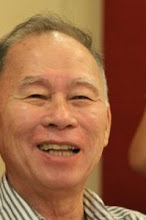
How to Distinguish Between Alzheimer's and Natural Aging


Our memory capacity changes as we get older, but memory loss that adversely affects everyday life is not an ordinary sign of aging and may actually be a symptom of the onset of dementia. This phenomenon causes a slow deterioration of memory, reasoning, and logic, with the most common type known as "Alzheimer's" - a serious disease that disrupts the functioning of brain cells and even stops their activity.
 So how can you tell whether the source of memory problems is the natural aging process or the development of dementia when signs appear that may indicate both? Using the information in the next article you should be able to distinguish between a situation that requires attention and natural processes that affect everyone.

What is the difference between natural aging and Alzheimer's?
We all know that as we get older, our brain and body become weaker. In a natural aging process, it means that we may experience a slowdown in thinking and movement, but our intelligence is not be affected. On the other hand, in the case of Alzheimer's disease, damage to nerve cells in the brain will cause memory changes to worsen as more cells are damaged. Although it is possible to develop Alzheimer's at the age of 30, 40 and 50, in most cases it affects people aged 65 and over. 

Changes in memory caused by old age will be related to the names of people or places, but changes caused by Alzheimer’s are expressed through forgetfulness that severely affects one’s ability to work and even engage in a social life and hobbies. It is recommended that you familiarize yourself with the following 10 sections to help you determine whether what you are experiencing is a natural aging process or the development of Alzheimer's disease. If you notice these signs in yourself, it is recommended that you see your doctor to confirm or refute your concerns.

Leave a comment

HORACIO DE LA COSTA


MAKATI QUEZON CITY THE GUIDE JANUARY 17, 2015

If you were one of those who caught Pope Francis’ mass at the Manila Cathedral last January 16, you may have chanced upon the words of Manila Archbishop Luis Antonio Cardinal Tagle in which he quoted a fellow named Fr. Horacio de la Costa who said that the resiliency of the Filipinos can be traced to “music and faith.”

While there is little argument to be made about that statement, some have raised a question as a consequence of the Cardinal’s statement: who is Horacio de la Costa? Today, this edition of The Guide will try to answer the question about this man’s identity and his contributions to religion, history, and even the landscape of the metropolis.

Born on May 9, 1916 in the town of Mauban in Quezon Province, Horacio Villanueva de la Costa was born to Sixto de la Costa, a judge, and Emiliana Villamayor. He spent his early education in Batangas before moving to Manila where he was eventually admitted to Ateneo de Manila.

It was in Ateneo where de la Costa shined, having displayed “excellence” not only in academics but also in student leadership. But it was in writing that he came to be well-known for as he served as a writer and eventually becoming the editor of the school’s newspaper, The Guidon.

Leave a comment

THE ROLE OF RELIGIOUS WOMEN IN ASIA TODAY

A conference given by Horacio de la Costa S.J. to the Sisters of the Generalate Communities, 1974, Typrwritten, 5 pp., AdM Archives

You asked me to say something about the role of religious women in Asia today. If you will pardon my saying so, I don’t think that’s a question you should ask a man. Especially not during International Women’s Year. You shouldn’t ask us men what your role is – you should tell us.

But you asked, so you must take the consequences. The first consequence is that you will rephrase the question. Instead of asking myself what the role of religious women in Asia today, I will ask myself what the role of the Religious of the Virgin Mary is in the Philippines today.

The first thing I notice about you is that you are the only religious congregation of women in the Philippines founded by a Filipina. I don’t know of any others. If there are, I humbly beg their pardon, and I say to them that what I say to you applies to them also. It seems to me that since you are a Filipino religious congregation in this special way, not only by your membership but by your very origins, you have a special mission: the mission of showing the world that there can be, that there is, an authentically Filipino way of living a authentically religious life. If you do this, you will be making a valuable contribution to what the 1974 Synod of Bishops considered to be one of the principal tasks of evangelization in the world today. What is that task? It is the task of making the Gospel incarnate in the particular cultures of the different peoples that make up the world, by building up local churches capable of making, each one of them, its own unique contribution to the rich variety of the one universal church.

Leave a comment

Dr. Google


We usually meet traditionalist doctors who would laugh when patients appear to know what ails them after consulting the internet. But modern medicine is no longer laughing: “big data” which is the back bone of Google is getting to be the gold standard in the practice of modern medicine.

How Big Data Is Transforming Medicine by  Bernard Marr  

When we visit our doctor or go into hospital, we have faith in the knowledge that the healthcare professionals involved are treating us according to proven scientific methods, otherwise known as evidence-based medicine (EBM). This means they’re prescribing drugs or selecting treatment methods that have proven successful in clinical research.

Although the term ‘evidence-based medicine’ only dates back to the early 1990s, the concept itself is much older. Controlled trials were routinely being conducted as early as the 1940s, and clinical knowledge and expertise was already being disseminated in medical journals and textbooks long before that. (In fact, the oldest medical journal still running today, The New England Journal of Medicine, was founded in 1812. Even older, the first official clinical trial was conducted in 1747, into the treatment of scurvy in sailors.)

Clinical trials and studies are all about conducting research into disease and conditions, and the various treatment methods that may ease symptoms or eradicate the illness altogether—they explore which treatments work best for which illnesses and in which groups of patient. All around the world, EBM is the established standard for the provision of healthcare. But, in the age of big data, that might be about to change.

Clinical trials work by testing new treatments in small groups at first, looking at how well the treatment works and to identify any side effects. If a trial proves promising, it is expanded to include larger groups of people. Often the trial will include comparing the new treatment to other treatments by separating patients into different groups, each trialing a different treatment. This is usually done by a process called randomization, where patients are assigned to the various groups randomly.

In order to safeguard participants and improve reliability, clinical trials have to meet rigorous scientific standards. However, that’s not to say there is no risk of methodological flaws, or that the small-ish populations used in clinical trials always generalize well outside of a particular study. This is where big data can help. By mining the world of practice-based clinical data—i.e. actual patient records—for information on who has what condition and what treatments are working, we could learn a lot about the way we care for individuals.

One company, California-based cognitive computing firm Apixio, has firmly set its sights on enabling healthcare providers to learn from practice-based evidence to individually tailor care. As Apixio CEO Darren Schulte explains, “We can learn more from the practice of medicine and refine our approach to clinical care. This gets us closer to a ‘learning healthcare system’. Our thinking on what actually works and what doesn’t is updated with evidence from the real-world data.”

A staggering 80% of medical and clinical information about patients is formed of unstructured data, such as written physician notes, consultant notes, radiology notes, pathology results, discharge notes from a hospital, etc.

Leave a comment

THE FREEDOM OF THE CITY by Horacio de la Costa S.J.

I was not born in Manila; but having lived in this city for so long, I have acquired a strong affection for it. No matter what part of the country we came from originally, we have all become, as it were, naturalized Manileños, proud to say of ourselves, as a certain Paul of Tarsus once said of himself, that we are citizens of no mean city.


The juxtaposition of “citizen” and “city” will try to remind us of a number of other words, familiar to us from daily usage, which are really derivatives of the Greek or Latin names for “city” such as “civitas,” and “polis.” Thus to be “civil” to someone is to treat him with the respect and regard with which a citizen treats a fellow-citizen; to be “urbane” is to have the good manners that may be expected of a city dweller; and this is the same as to be “polite.” “Police” comes from the same root as “polite,” although you may have had encounters with the police in which this was not immediately apparent. At any rate, the police is that body of men upon whose vigilance, courage and integrity the good order of the city depends.

What the police enforce is the “civil” law, the law of the citizen, the law to which city people freely subject themselves. This they do because they are “civilized”; because, unlike barbarians, who respect only force, they have learned to live under law; and this they have learned by living together in peace in the city. Living together thus, cheek-by-jowl to one another in a relatively limited area, they have also learned to govern themselves, and so take part with great gusto in the process by which they form, dissolve, reconstitute, supervise, control and clean up their own government – the process familiar to us all under the name of “politics.”

If these derivatives of the word for city suggest anything, it is surely that men have generally have found great advantages in being part of a city; that many of the good things they enjoy they owe to their city; and hence that their city is something worthy of their loyalty and love. And so we see that before there was love of one’s fatherland, or patriotism, there was love of one’s city, or citizenship; the first was, historically, merely the extension of the second. Indeed, the ancient Greeks identified what we would now call a nation, or the state with the city; they found it difficult to conceive of a nation or state larger than a city. I believe it was Aristotle who said that a state should not be so big that you could not walk from one end of it to the other in a single day. The thinking behind this was that what binds the people of a state together is mutual respect, esteem  and affection; and how can you love someone you do not know?

Manila is a city with a great past. This year, we celebrate the four hundredth anniversary of the founding of Manila as a Spanish city. But the history of Manila goes back much further than that, so far back that we cannot set a definite date for the founding of the Tagalog citadel on the site of which the Spanish conquerors built Fort Santiago.

Of that citadel, the first Spanish captain ever to set eyes on it, Goiti, said that “it was situated on the bank of the river,” and was “defended by a palisade all along its front. Within it were many warriors, and shore outside was crowded with people” – the civilian population, presumably, who could not be prevented from rushing out of the citadel to gape at these strangers from the West. Trust Manilenos to break through police lines whenever there is a site to be seen! At the same time, Goiti continues – pieces of artillery stood at the gates, guarded by bombardiers, linstock in hand.” So there was someone in authority in the city who thought it prudent to take precautions.

We know who this someone was – a young rajah named Sulayman, whom we can picture standing very straight before Captain Goiti and saying to him what is, to the best of my knowledge, the first recorded speech of a Manileño – a speech recorded for that reason, and also because it was so unexpectedly short. As Goiti reports it, Sulayman said “that he was pleased to be the friend of the Spaniards; but . . . that (they) should understand that he would not tolerate any abuse . . .; on the contrary; they would repay with death the least thing that touched their honor.”

We would be hard put to it, I think, to find a briefer or a better statement of the foreign policy of this country that these words of the Gatpuno of Maynila whose name has gone down to us. Perhaps the Department of Foreign Affairs should inscribe its substance on Romblon marble in its Hall of Banners

Leave a comment

Search

Swedish Greys - a WordPress theme from Nordic Themepark. Converted by LiteThemes.com.