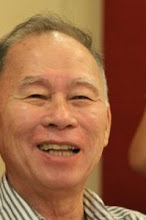
THE FILIPINO: AN IDENTIKIT by Horacio de la Costa, S.J. (Part I)


When all is said and done, what is a Filipino?  How do you identify him in a lineup that includes an Indonesian cabinet minister, a Hongkong taxi driver, an Indian guru, a Neopolitan monsignor, a banderillo from Seville, and a Puerto-Rican bus boy from New York Hilton?  Can one do so simply from Bertillon measurements, skin coloring, shape of nose, and the presence (or absence) of the Mongolian eyefold?  Or does one have to resort to more intangible indications, “mindset”, “spiritual profile,” or whatever is the currently fashionable term for speculations not subject to measurement and hence more enticing to the essayist, as being more difficult to dispute?

Allow this essayist to attempt the latter option – the line of least resistance for one who, after four years in the hard-driving, task-oriented West, has returned to the shade of his native mango tree to recover in a supine position his Filipino identity.

This particular mango tree happens to be within sight and sound of the sea; and so the first thought that comes to one is that Filipinos were in the beginning a sea-faring people.  They had to be, for how else could they have populated an archipelago?  There are, of course, those earlier Filipinos  who came dry-shod (or barefoot) over the land-bridges of some forgotten ice age.  But even they, who claimed for themselves the proud title of Lords of the Land, will admit upon reflection that the Filipino identity begins with the sea-faring Malay, the adventurer who named his settlement on sheltered beach or river-mouth, as a matter of course, after his sailing vessel, his barangay.  

Barangay: the name today of a community of peasants – of landlubbers.  Which is a puzzlement.  Where on earth (or sea) did the seamen go?  Before the Spaniards came, they were still there; very much so.  We have fleeting glimpses of them trading from Batangas to Sabah to Malacca; a triangular trade, as economists are at pains to inform us, except that these venturesome spirits did not hesitate to protract one or the other side of the triangle.  Coasting, it would seem, up to the Malay peninsula and down the Indian subcontinent, they ran before the wind to Madagascar, where as a result, people still speak a sort of Tagalog called Malgache.

Even after the Spaniards came the seamen survived – after a fashion.  If the Filipino Muslims of the south were able to successfully to resist Spanish domination, it was in part because their light swift caracaos were more than a match for the lumbering Venetian galleys of the colonial government’s interisland fleets.  And the historian Delgado goes on record that if the Spaniards officered the fabulous Manila galleons, those who built them, and sailed them, and manned their guns, and sent Dutch raiders yelping back to Batavia with their tails between their legs, were Filipinos.

Leave a comment

THE FILIPINO: AN IDENTIKIT by Horacio de la Costa (Part II)


THE PROBLEM OF ASSIMILATION OF MINORITIES

The ultimate answer to this question of unassimilated minorities, Muslim and Chinese, is fairly simple.  They must be assimilated – or, more precisely, integrated – into the national community.  The problem is how.  The problem is the process.

Whatever shape that process may take, it will take consensus on a least two points
.
First: on the part of the national community, an effective willingness not only to accept but to welcome pluralism.  We should make it perfectly clear to all that in this national community, historically Christian, there is today, if there was none yesterday, a secure and honored place for Islam.  At the same time, we should make it perfectly clear to ourselves that our indigenous culture has been modified by techniques, attitudes and insights derived from cultures other and older than our own; specifically, from the Chinese culture; and that this contribution is truly an enrichment, not a negation or distortion, of our national values.

Second: on the part of the minorities, an effective willingness, not only to suffer but to seek integration.  They must realize that the only way to win full acceptance in a national community is to swear allegiance to it, an allegiance as irreversible as the vows of marriage: “for better or for worse, for richer or for poorer, in sickness and in health, until death do us part.”  And to make good this oath by deeds.  And to be convinced that by this oblation, they do not diminish but, on the contrary, enhance their particular cultural personality, since they make it contributory to a culture still in the making; a civilization that may be (who knows) the equal of that which began as a small settlement in a fertile bend of the Yellow River and became in due course, China.

Leave a comment

WHAT ARE WE UP TO

Horacio de la Costa S.J.

When I was younger, and Father [Robert] Gannon was younger still - that is to say, a very long time ago -  mention of the Philippines inevitably evoked in the American imagination a picture of blue skies and palm-fringed shores, with every palm tree held upright by a Filipino leaning against it, strumming a guitar.

Whether or not it had any relationship to reality, that was the image. One wonders what the American image of the Philippines is today. Perhaps none whatever; simply a blank. Why should there be? Americans have a lot more important things than the Philippines to think about these days. But if image there is, it must be a quite different image from that of former years, if only because the realities are different.

Certainly, despite typhoons, earthquakes, and assorted calamities, the palm trees are still there, as befits the world’s largest exporter of copra. But of the guitar-strumming boys, one has probably gone off to manage a copper mine, another is a Jesuit running for the Constitutional Convention, and a third commands a unit of the New People’s Army, and has a price on his head.

It is still possible for an airline (which shall be nameless) to describe the Philippines in a television advertisement as “a lovely cluster of islands peopled by lovelies,” for there are, admittedly, a few lovelies scattered about. But it is no longer possible, if it ever was, to think of the Philippines as the most carefreee of combinations, a land of the morning where it seemeth always afternoon.

Leave a comment

THE CHURCH AND DEMOCRACY

 by Horacio de la Costa S.J.
Paper written in 1954, typewritten original in AdM Archives; published by 2B3C Foundation in the volume entitled “Selected Essays and the Filipino and His Problems Today”
The basis for a discussion of this subject may be provided by endeavoring to define the two terms involved and the nature of the relationship between them.
By the Church is meant, I would suppose, the Roman Catholic Church; if so, our discussion will prescind from other forms of organized religion and even of organized Christianity.
What is the Church? We should first define it non-commitally; in terms which would be acceptable even to the unbeliever. In this sense, the Church is an association which has for its purpose to satisfy the religious needs of its members, or what those members consider to be their religious needs.
To the believer, that is, to the Catholic, the Church is, in addition, a society founded by Christ the Son of God, and by Him endowed with all the means necessary to attain its end, which is the supernatural salvation and perfection of the members in this life and in the next.
What is democracy? All will accept, I think, the sufficiently distinctive yet non-commital definition that it is that form of political organization in which the authority resides in an inherent and permanent manner in the people, that is, the generality of citizens. “Inherentally and permanently”; that is to say, the citizens of a democracy; while designating certain periodically elected  representatives to conduct in their behalf and with their authority the actual operations of government, do not thereby divest themselves of that authority, but retain at all times the power to recall such representatives, replace them with others, and supervise and control their actuations in office.

Leave a comment

TSINOYS AMONG US

THE CHINESE BEARING GIFTS  by Horacio de la Costa S.J.

Somewhat revised from an address to students and their parents at Xavier School, San Juan in 1971.

May I make some preliminary statements about Philippine culture?  The first remark would express an  obvious but important fact, namely: Philippine culture is in the process of development, just as is every aspect of our country. It is not, in other words, a culture which has reached full development, like that of China or Japan, but one that is in the course of development.

There are two ways of conceiving this development, and the course it should take. One way is to claim that it ought to be a process by which we gradually get rid of what we consider alien to our culture, as though we were peeling off the successive skin of an onion, in the end we would be left only with what is truly indigenous and Filipino.

That is one way of conceiving it, and you have probably had experience with or have read and listened to people who conceived of the development of our culture this way. “Let us get rid of what we imitate from other culture,” they say and “hold fast only to what us truly native to our culture.”

The other way of conceiving our cultural development is accept the fact that over the course of time we have borrowed many things from other nations and other cultures.

Leave a comment

Search

Swedish Greys - a WordPress theme from Nordic Themepark. Converted by LiteThemes.com.