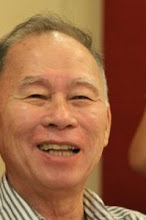
The Seven Brave Horsemen

Before the start of the second world war, we were seven young men from Tampoy, all surnamed de Leon, trying to SHOW how brave they were. The eldest was Carlos Jr. (Canchu) while the youngest was Julian (Bong), both sons of Carlos de Leon,Sr. The other three were Nunilo, myself and Nestor; the three of us were sons of Roque. We were all playmates using the thick foliage and bushes behind Cine Malolos that was close TO THE SANTOS CLINIC. On that particular morning, Dr. Luis Santos himself appeared from the bushes and, with a smile, invited us into his clinic. All of us respectfully lined up in answer to our "lolo" Luis' invitation. Julian and Nestor were then too young to undergo the rite of "BAPTISM", a valid excuse that would haunt them for the rest of their young lives. Absentees from the initiation were Arturo and Job, both sons Carlos. For what reason, I do not know.

Leave a comment

RAINY DAYS

At the start of a new year, after my recent 88th birthday, and in the midst of a vicious raging Omicron pandemic, it is difficult not to feel anxious about my life. After 80, it seems the remaining years are shorter than the one before it. So much of the last 2 years has been hijacked by this pandemic - lockdowns and restrictions on mobility have kept my wife’s life and mine away from our old known routines.

During most of those 88 years, I have managed to keep a stoic but smiling face that many termed as the indifference of an introvert. Little do people know that, like a turtle, I have my personal shell or shelter in my immediate family – my silver bullet, which I now share with my reader.

My theory is that our country is blessed by the mantle of our Mama Mary. Many have experienced her protective concern. I have felt this at Carmelite convent in Lipa. We just need to be sure that we deserve this special attention.

For as far back as my grade school days, I used to wake up in the morning with my call to arms: “Angel of God, my guardian dear, to whom His love commits me here, ever this day be at my side to light and guard, to rule and guide . . .”

I firmly believe in my plea: “ . . God, whose only begotten Son by His life, death and resurrection, has purchased for us the rewards of everlasting life, grant, we beseech Thee, that through the merits of the Holy Rosary of the Blessed Virgin Mary, we may imitate what they contain . ."

 And my constant reminder for me to keep the faith through “The Memorare . . . O most gracious Virgin Mary, that never was it known that anyone who fled to thy protection, implored thy help, or sought thy intercession, was left unaided."

”When the day is done, I submit my life thus: “Now I lay me down to sleep, I pray the Lord my soul to keep, but if I should die before I wake, I pray the Lord my soul to take.”

"My Lord and my God, Jesus for Thee I live, Jesus for Thee I die, Jesus I am Thine in life and in death."

So, why should I worry - let the rain pour on my parade. I have Mama's mantle over my head.  I merely follow traffic rules from above.

Leave a comment

EPILOGUE about the AUTHOR


NUNILO

This is a story that just has to be written. It’s about someone who lives such an outstanding and selfless life but keeps a very low profile making me feel uncomfortable just writing about him. He is unassuming to a fault.  A voracious reader, up to this date, he even takes post-graduate online courses.

When Corazon my younger sister contracted end-stage kidney desease, Nunilo, my selfless elder brother readily donated one of his kidneys allowing her to continue normal life for an extra 25 years. His sacrifice enabled her to give birth to Celeste    

I will therefore request those closest to him to comment and in effect, add, if not approve this article about him.

Being a writer-historian he introduces himself thus: “I was born in Manila, at the Mary Johnston Hospital on Quesada St., overlooking Manila Bay.  The North Harbor area was still under the sea then and Calle Bangkusay, which is now some distance from the sea, was then the shoreline of Tondo.

My parents were schoolmates at the Bulacan Provincial High School in Malolos and my father had been wooing my mother since high school.  Father was a senior Bachelor of Science in Commerce student at the University of the Philippines while Mother was in fourth year of her Bachelor of Science in Pharmacy course at the University of Santo Tomas when they were wed, and “Tatang” had to find a job.  Having to mix work and studies, he only got his diploma the year after their marriage.  When they were married, “Inang” had stopped her studies, as it later turned out, for keeps. We lived in a rented accessoria, as budget-priced apartments were then called, on Calle Ilaya, very near the Tondo parish church.  UP was then on Padre Faura St. in Ermita district, Manila while UST was where it continues to be, along España Blvd.”

Nony is my elder brother, less than 2 years my senior. My earliest memory of him was that he was someone to emulate.  So I would always be at his side. When I started reading aloud, he would correct me: I remember specifically the words “bureau” and “gathered”- words that I mispronounced literally like buryaw and gat-her-ed. I learned so well that my grade school teacher, a nun, told my mother that she had to look up such words as kinky in the dictionary because she did not know there were such words.

I lost track of him when he started high school in Malolos, while I went ahead to the big school in Manila. He was in a different league when he also transferred to Ateneo college. We had our own school barkadas.

Cousin Josie Pena and he were classmates in high school at Immaculata Academy. Both were at the top of their respective classes. Nony almost gave up his designation as valedictorian of the boys’ class, because he shunned delivering the valedictory speech. Josie had no problem delivering her valedictory speech.  

Tampoy Tales included my story in our early years.

He enrolled in Ateneo Padre Faura – finished LittB, a liberal arts course, which allowed him to work in various sales jobs, one of which was Del Rosario Brothers.

I remember another joint altercation.  Sometime in 1958, while I was job-hunting, I was hiking in the underdeveloped area of Pasig towards Resin Inc., where I was to be interviewed by Ito Carlos, along came a US Tobacco van to rescue me from the dust and the sun. Yes, it was my KUYA who took me to Resins. I did not take the job because I could not readily commute to Resins in the wee hours of the day or night.

When we 6 siblings were already studying in the big city, we stayed in a rented house in Vermont St., Malate in Manila. This house was within walking distance to Ateneo in Padre Faura and St. Paul College along Herran St.  Two years later, when the Ateneo moved to Loyola Heights in Quezon City, we moved again, this time to a brand new bungalow which Inang had purchased on South 12th St. (later to be renamed Dr. Lazcano St.) near Sacred Heart Parish, Quezon City, two bus rides and a fifteen-minute walk from my college classes at the Bellarmine Hall, overlooking Maryknoll College.

That South 12th St. house was to serve as a residence of quite a few close relatives.  Cousins Diana, Inday and Tessie lived there during their college studies.   Joby was there during the early years of his working career.  Tio Carlos stayed with us whenever he had to visit the Department of Public Works head office in Port Area, Manila.

He quotes: “I did not know it then but that initial move to Manila would be the last time I would see myself as a resident of Tampoy.  I would be back later for various reasons; I even stayed in Tampoy for a year when northern Bulacan province and southern Pampanga were my sales territories in one of my first jobs after college.  None of these later visits would be quite the same as before.  I guess the “Huckleberry Finn perspective” with which I looked at Tampoy in my early years was no longer there.  The Tampoy of my childhood was gone and there was no returning.  Of the more than a dozen houses I have lived in, it is only Tampoy that appears when I dream of home, probably because my most memorable early experiences happened there.” 

Leave a comment

Shameful LOCAL Politics

Inspired by Boo Chanco

Over the past few days, social media had a lot of commentary about how noble, patriotic, and honorable of the Japanese Prime Minister to resign from office just because he has a medical condition that prevents him from giving his position his all. That will never happen here, many commentators said.

Of course, it won’t. Japanese officials resign at the mere whiff of something gone wrong under their wing. Some even do the extremely honorable act of seppuku or hara kiri after being accused of corruption.

Honor and country above all. But the nature of our politics and culture is vastly different from Japan. Politics here is a personal blood sport, a zero-sum game where showing any sign of weakness is suicidal.

Here, public office is too good to be relinquished. It is the family business. It is as an opportunity not so much to render public service, as a chance to amass power and wealth. A leader’s primary responsibility is not to the nation (an abstract concept for many), as it is to those around him.

Parochialism is why presidents do not choose the best and the brightest as members of his Cabinet. We have many capable Filipinos who can help manage some of our most chronic problems, but have no political connections.

Very rarely do we get leaders like the late Jesse Robredo and the current mayor of Pasig, Vico Sotto, whose primary reason for seeking public office is to render public service.

We elect officials whose values are known to be rotten to the core. It is fair to say that the officials we elect reflect the nature of our electorate. And yet we complain and wonder why we are being left behind.

What is our problem? Is it our damaged culture?

I decided to torture myself and re-read the James Fallows article on our damaged culture. Well... very little has changed since that article was written in 1987. Many Filipinos may bristle at the suggestion of our damaged culture, but look what we have today... 33 years after... we only got worse.

Our political history is horribly personal. In the midst of a war for independence against the Spaniards and then the Americans, our political leaders were liquidating rivals. Look at what happened to Andres Bonifacio. Look at what happened to Antonio Luna.

And since we were just a collection of independent tribes living in dispersed islands bundled together by the Spaniards and called them the Philippine Islands, we never really developed a sense of national identity or national loyalty. Even in the main island of Luzon, our identities are wildly dispersed into Ilocanos, Ibanags, Kapampangans, Tagalogs, and Bicolanos. I remember my late grandmother in the 1940’s refer to us in Bulacan as “Tagalogs” instead of Filipinos. Because we were forced to be a country, we have failed to accept the concept of national interest that is above everything else.

To me, that explains why we fell behind in the region. As Fallows observed: “The countries that surround the Philippines have become the world’s most famous showcases for the impact of culture on economic development.

“Japan, Korea, Taiwan, Hong Kong, Singapore — all are short on natural resources, but each of them through hard study and hard work had been forced to unify and  defend themselves against war-mongering aggressive neighbors. Unfortunately for our people, because of over 350 years of colonization, the Philippines illustrates the contrary: that culture can make a naturally rich country poor…

“I’ve never before been in a country where my initial impressions were so totally at odds with the standard, comforting, let’s-all-pull-together view. It seems to me that the prospects for the Philippines are about as dismal as those for, say, Vietnam are bright.

“In each case the basic explanation seems to be culture: in the one case a culture that brings out the productive best in the Vietnamese (or Koreans, the Japanese, or now even the Thais), and in the other a culture that pulls many Filipinos toward their most self-destructive, self-defeating worst.

“Officials in both South Korea and the Philippines have pointed out to me that in the mid-1960s, the two countries were economically even with each other, with similar per capita incomes of a few hundred dollars a year.

“The officials used this fact to make very different points. The Koreans said it dramatized how utterly poor they used to be (“We were like the Philippines!” said one somber Korean bureaucrat), while to the Filipinos it was a reminder of a golden, hopeful age… Since the 1960s, of course, the Philippines has moved in the opposite direction from many other East Asian countries.”

But Fallows believes “It can’t be any inherent defect in the people: Outside this culture they thrive. Filipino immigrants to the United States are more successful than immigrants from many other countries. Filipino contract laborers, working for Japanese and Korean construction companies, built many of the hotels, ports, and pipelines in the Middle East.

“’These are the same people who shined under the Japanese managers,’ Blas Ople, a veteran politician, told me. ‘But when they work for Filipino contractors, the schedule lags.’”

Fallows makes his diagnosis: “I think it is cultural, and that it should be thought of as a failure of nationalism… a feeble sense of nationalism and a contempt for the public good. Practically everything that is public in the Philippines seems neglected or abused.”

We are “a country where the national ambition is to change your nationality,” an American who volunteers at Smoky Mountain told Fallows.

“The US Navy accepts 400 Filipino recruits each year; last year 100,000 people applied. In 1982, in a survey, 207 grade-school students were asked what nationality they would prefer to be. Exactly 10 replied ‘Filipino.’

“’You are dealing here with a damaged culture,’ four people told me, in more or less the same words, in different interviews.

“It may be too pessimistic to think of culture as a kind of large-scale genetics, channeling whole societies toward progress or stagnation…”

But how can we explain what we have become… unable to keep the pace of our Asean neighbors?

Until we are able to elect a nationalist leader who is neither Cebuano, Visayan nor Tagalog but who can unite us and inspire us as never before, we will always scratch our heads with admiration every time some Japanese leader does something that puts national interest ahead of everything else, unheard of in our country.

Leave a comment

What May Happen Even After a COVID-19 Vaccine Is Approved

 Inspired by Helena M.

The world has been taken up by the corona-virus storm only about 5 months ago, and yet, it feels like a whole lifetime. Life has undoubtedly changed, especially for my octogenarian peers who are anxiously counting down the days to the long-awaited solution. They probably understand by now that there isn’t going to be a clear cut ending. The good old days of our youth are gone forever.

Having a working vaccine will be a major leap forward, but according to experts, it won’t mean life will just switch back to what it was pre-pandemic. “This is not going to be one of those light switch things when all of a sudden we have a vaccine and everyone is vaccinated. It’s going to take some time,” said Hilary Godwin, dean of the University of Washington’s School of Public Health.

So how exactly will life look once the coveted vaccine arrives, and what can we expect a vaccination process to look like? We rounded up the opinions and predictions of public health and mental health experts.

The Vaccine Race

Researchers around the world are working on more than 165 vaccines; more than two dozen are already being tested in people. Early human studies focus on safety and finding the best dose. The four major front-runners, which are heeded towards the larger phase 3 trials.

Two of the leading candidates, the relatively young company Moderna, and Pfizer (in collaboration with BioNTech), are basing their approach on novel methods. They use genetic material from the coronavirus called messenger RNA, or mRNA. Unlike traditional vaccines, which expose the body to a viral protein to stimulate the immune system, mRNA acts as an instruction kit, telling the body how to construct the proteins itself. While the results are overall encouraging so far, experts note that there is a potential risk in relying so heavily on unproven techniques as new technology can sometimes cause unforeseen problems or side effects.

Another hopeful candidate is the vaccine being developed by Oxford University and drug-maker AstraZeneca. Early studies have shown that the Oxford vaccine stimulates the immune system as intended, and larger-scale studies are currently underway. Meanwhile, several Chinese companies are advancing in the race to find a vaccine, with Beijing based company SinoVac showing the most promising results and launching a phase 3 trial of its vaccine in Brazil.

With all this excitement about the impressive speed at which the vaccines are being developed, it is also raising some concern among health professionals. “It’s great that the science is moving quickly, but it also creates limitations in terms of what we know about the efficacy of the vaccines,” said Aparna Kumar, a nurse-scientist and assistant professor at Thomas Jefferson University, to Huffington Post.

Apart from that, Kumar also notes a vaccine may not eradicate COVID-19 but will act more similarly to the flu vaccine, which is about 40% to 60% effective, depending on the year and strain of the flu. While the flu vaccine prevents many people from getting severely ill and from the disease spreading as widely as it could have, we still know that many people are going to catch it. Kumar noted that it’s extremely difficult to truly discuss the effectiveness of a Covid-19 vaccine before it is distributed to the general public.

That leads us to the other reason an approved vaccine will not be a magic wand - distribution issues. Manufacturing enough doses and distributing them in a timely manner will not be a simple task at all, according to Tony Moody, a physician-scientist at Duke University. “We make billions of doses of the influenza vaccine every year — but doing that for a new product and having the ability to get it rapidly distributed is going to be really challenging.”

The long-term cultural consequences of the pandemic

There is no doubt individuals and societies are profoundly affected by major events that occur in their lifetime. Just as those who lived through the Great Depression might have different tendencies than someone who did not, it is expected that modern-day society will be shaped by the Covid-19 pandemic in more ways than just the health aspect. These are the behavioral and cultural changes experts are predicting, for the days after the pandemic's end.

Wearing a mask will become the norm - many experts claim that wearing a face mask in public spaces is likely to stick around and become a part of the culture in western countries. Wearing a mask to protect yourself may become a norm, the way it was in many Asian countries in recent years.

Work culture - The way we treat work and career life is already shifting and transforming before our very eyes, and experts predict this new form is likely to stick around. The imposed lockdowns made many industries adopt working from home routines and technologies like Zoom in a capacity that would not have happened otherwise. The realization that work can be accomplished remotely is likely to make many companies more flexible in allowing it, as well as have significantly fewer business trips.

Major concerts and sporting events - Unfortunately, it seems that crowded games and packed concerts will not be a part of the new normal, at least for a long while. “It’s going to be hard to convince people to go back to large gatherings that are simply for entertainment or recreational purposes. I doubt we’re going to have big events with tens of thousands of people coming together,” Moody said.

The safety measures required for holding a large-scale performing arts or sporting events in an enclosed venue may prove to be too much. To ensure distancing venues may need to charge twice as much because they can only fill half as many seats, which will make these events out of reach for many people, an undoubtedly problematic situation. It is likely that outdoor social gatherings, where there is fresh air circulation, will become even more of the norm.

At the end of the day we shouldn't forget, we have all been dealing with this situation, every day 24/7, in the past few months. Despite the unimaginable shifts and turns in our lives in the past months, it’s natural to lose track of the way the pandemic affects the small details of our daily lives, mood, and consciousness. When looking at the big picture, Covid-19 will have many fascinating long-term effects, even after a vaccine is approved. We can only imagine how life will be like, especially for super seniors like me, who has suffered strict quarantines for the last 5 months. 

Leave a comment

NOW AND THE HEREAFTER

It’s May 17, 2020, just 2 days after the Enhanced Community Quarantine (ECQ) was lifted from my neighborhood. We are now under Modified Enhanced Community Quarantine (MECQ). These lock-downs are declared to slow down the spread of infection of the deadly covid-19 pandemic by stages. Unfortunately, my age condemns me to the group susceptible to catch this wily virus and is therefore barred from straying outdoors. Its good my hair can no longer grow topside but only around the sides and back because I may not be within one meter from a barber's scissors.

But, how things have, indeed, changed world-wide for all humanity. We are entering a new dark normal way of life, not knowing how it will turn out - and how soon. 

I have lost touch with my aging buddies—although 71 of us are theoretically still around but may no longer be kicking. A few weeks ago, three of them have marched off in quick succession, Manny Tanjangco, Ed Roceles and Sepoy Severino. And at least 2 others are bedridden.

As I myself live on, hobbling along, approaching my 90s, words of writer Red Smith’s eulogy for a fellow often come to mind: “Dying is no big deal; the least of us will manage it. Living is the trick!”

The immediate trick, as I see it now, is to stay away from doctors and hospitals amid the challenges of the raging pandemic and the ripening to old age.

I find my being locked down at home less of a problem as I have often been staying home even before the onslaught of covid-19 pandemic. I’m convinced I’m at least keeping my immunity at a high level for as long as I keep doing my nightly earthing or grounding routine and my daily intake of five tablespoonfuls of virgin coconut oil — and other food supplementation fairly religiously for over three years now.

If we should be so blessed, we as a couple could best accept the realities of old age together, avoiding cariño brutal, sometimes bickering, sometimes hugging, laughing at ourselves and at each other. Before we get there I’d like to be able to accept our new realities.

That’s exactly what is happening to us, for which we have no way of preparing.

But since we grow old only once, we can at least give the following tips to help the younger generation grow old properly.

1. It's time to use the money you saved up. Use it and enjoy it. Don't just keep it for those who may have no notion of the sacrifices you made to get it.


2. Stop worrying about the financial situation of your children and grandchildren. Don't feel bad for spending your money on yourselves. You've taken care of them all their lives and you've taught them what you could.


3. Keep healthy lives, without great physical effort. Do moderate exercise (like walking even with a walking cane), eat well, and get your sleep. It's easy to become sick, and it gets harder to remain healthy.

4. Always buy the best, most beautiful items for you or your significant other. The key goal is to enjoy your money with your partner. One day, one of you will miss the other, when money will no longer provide any comfort. So, enjoy it together.

5. Don't stress over the little things. You've already overcome so much in your life. You have good memories and bad ones, but the important thing is the present.

 
6. Regardless of age, always keep love alive. Love your partner, love life, love your family, love your neighbor, and remember: avoid cariño brutal, it may hurt sensitive souls.

7. Be proud, both inside and out. Unless the pandemic restrictions disallow it, don't forget to go to your hair salon or barber, do your nails, go to the dermatologist and the dentist, keep your perfumes and creams well stocked.


8. Don't lose sight of fashion trends for your age, but keep your sense of style.

9. Always stay up-to-date. In this digital age, watch the news on TV, go online and read what people are saying. Make sure you have an active email account and sign up to Facebook or a couple of social networks.


10. Respect the younger generation and their opinions. They may not have the same ideals as you, but they are the future and will take the world in their direction. Give advice, not criticism.


11. Never use the phrase: "In my time". As long as you're alive, you are a part of this time. Have fun and enjoy life.


12. Some people embrace their golden years, while others become bitter and surly. Life is too short to waste being surly.

13. Don't abandon your hobbies. If you don't have any, make new ones.

14. Even if you don't feel like it, socialize and try to accept invitations. Get out of the house when allowed, use digital technology to meet people you haven't seen in a while, experience something new (or something old).


15. Be a conversationalist. Talk less and listen more. It perks up the brain. Most seniors go on and on about the past, not caring if their listeners are really interested. Speak in courteous tones and try not to complain or criticize too much unless you really need to.

16. Pain and discomfort go hand in hand with getting older. Try to minimize them in your mind. They are not who you are, they are something that life has added to you. If they become your entire focus, you lose sight of the person you used to be.

17. If you've been offended by someone, forgive them. If you've offended someone, apologize. Forgive, forget and move on with your life.

18. If you have a strong faith, savor it and entrust everything to the Almighty. The key is not to waste your time trying to convince others. They will make their own choices no matter what you tell them, and it will only bring you frustration.


19. Laugh. Laugh out Loud. Laugh at everything. Remember, you are some of the lucky few who are managing to live a long fruitful life.


20. Take no notice of what others say about you and even less notice of what they might be thinking. They have no idea about your history, your memories and the life you've lived so far.
There's still much to be written, so get busy writing and don't waste time thinking about what others might think. Now is the time to be at rest, at peace and as happy as you can be!

21. Do not surrender to the temptation of living with your children or grandchildren. Filipinos are great for being family oriented. Your children or grandchildren will definitely avoid dumping you to old folks home. But modern condo living is getting to be unavoidable and domestic help is getting scarce. But we all need privacy. If you (heaven forbid) lose your partner, then find some kind soul to care for you and help out. Even then, do so only if you feel you really need the help or do not want to live alone.

AND REMEMBER: "Life is too short to drink bad wine. And the memories you leave behind will stay well beyond your grave or your urn,"

Leave a comment

Hunger looms in South East Asia as China Grabs River, Seas

Jarius Bondoc

Filipinos had better produce two million more tons of rice a year. Vietnam and Thailand, from which the Philippines gets cereals, will soon no longer be able to sell. With harvests dwindling, they must conserve stocks for domestic consumption. Filipinos will be on their own.

China has dammed up the Mekong River on its side, drying up farms of southern neighbors downstream. Diverted by 11 Chinese dams, Mekong water levels in Vietnam, Thailand, Cambodia and Laos are at the lowest in 60 years. Large swaths of rice lands, fruit and vegetable plantations and fishponds are parched. Livelihoods of 60 million people are crunched. Drinking water sources are becoming scarce. Salinity is ruining the fertile Mekong Delta. Treating the river as its possession alone, Beijing is to build eight more dams. That will totally dry up Vietnam and Thailand’s irrigation. Hunger looms in mainland Southeast Asia. Philippine imports of cheap starch, coffee, tea, fish, crustaceans and mollusks from them will end.

The Mekong springs from the Tibetan plateau, as do the Yellow and Yangtze rivers eastward and Brahmaputra to the west. Since Beijing’s communist rulers annexed Tibet in 1956 they claim right to do as they please. They refuse to sign up with the Mekong Water Commission consisting of Vietnam, Thailand, Cambodia, and Laos. Doing so would oblige them to share the river, or at least scientific data on rainfall and siltation. Two of China’s 11 dams alone contain as much as 11 million square miles of water, as large as Chesapeake Bay in America. It’s clearly more than enough for China, world experts say. But Beijing’s commissars are obsessed with grandiose engineering projects, even if harmful to their own citizens, like the Three Gorges monstrosity.

There’s worse. As world focus is on fighting COVID-19 pandemic, Beijing is escalating militarization in the South China Sea. Objective: food, fuel and geopolitical supremacy. More arms have been placed in seven Philippine reefs that Beijing illegally concreted into fortresses since 2013. From those Beijing dispatches Chinese fisheries militia vessels to poach in the Philippines’ exclusive economic zone. With their catch dwindled, Filipinos must buy from China scad (galunggong) stolen from them. In Scarborough Shoal 120 miles from Luzon but 800 miles far from China, Beijing’s gunboats bar Filipino fishers. Inside Chinese thieves take giant clams and fan corals planted there by Filipino scientists in the 1970s. All those Beijing does against international laws and the UN court ruling against its destruction of food sources and the environment.

Of late Beijing’s navy has also harassed Filipino sailors closer to Palawan. A Chinese warship trained weapons on a Philippine patrol in the Malampaya gas field. Beijing falsely claims the area and nearby gas-rich Recto Bank. If it takes Malampaya, Luzon would lose 45 percent of its power source. Blackouts would force food processors and poultry and hog raisers to shut down.

China also poaches in waters of Vietnam, Indonesia, Malaysia and Brunei. Friendship and neighborliness mean nothing to Beijing’s  communist overlords. The rights of 667 million Southeast Asians are of no import.

Meanwhile in Santa Cruz, Zambales concerned citizens on Wednesday expressed alarm over a report that a Chinese ship docked at the port in this town is being loaded with nickel ore, defying government regulations against such mining.

Where can we turn to? Is war inevitable?
https://youtu.be/vAfeYMONj9E


Leave a comment

Cancer Myths

It can be hard to distinguish fact from fiction, as much of the inaccurate information looks and sounds perfectly plausible. But if you scratch the surface and look at the evidence, many continually perpetuated ‘truths’ become unstuck.

In this post, we want to set the record straight on 10 cancer myths we regularly encounter. 
Driven by the evidence, not by rhetoric or anecdote, we describe what the reality of research
 actually shows to be true.

Leave a comment

5 Ways To Provide Deeper Meaning to a Long Happy Married Life


Edited By: Nataliya Babota
Learning that your partner is suffering from a serious health condition is heartbreaking and difficult to accept on its own, but understanding that you will have to become their caregiver is an additional blow that can leave you feeling completely lost. Still, you surely understand that they will need your support now more than ever, and in new and unexpected ways, too. Finding yourself in such a challenging situation may make you feel helpless, but there are certain things you can do to support your spouse, no matter what their condition may be. Here are 5 ways you can help your spouse through a health challenge.
1. Learn About Your Partner’s Condition
Certain conditions require lifestyle and diet changes or come with symptoms you might not be aware of, and one of the best ways to be prepared for these challenges is to educate yourself about your spouse’s health condition. Apart from being more helpful at meeting your partner’s new needs, you will also feel calmer and more in control of the situation if you know what’s going on with your loved one.
2. Spend Time and Listen To Your Spouse
Be sure to let your spouse know you have their back and express your love. But even if you’re not the consoling type and have no idea what to say, you can express your readiness to help and support your loved one by listening and spending time with him/her. If their health allows, do things together both of you enjoy, even if it’s just watching a film together or spending time with the family. Chances are, both of you will cherish and gain a newfound appreciation of these seemingly ordinary family moments.

1 Comment

Anti-Aging Drugs Are Coming – an expert explains


by Richard Faragher

They may not be as far off as you think.

There will be almost ten billion people living on Earth by 2050 and two billion of them will be over the age of 60. Growing old is the primary risk factor for multiple chronic and life threatening conditions such as diabetes or cardiovascular disease. This burdensome morbidity is the most distressing aspect of old age – compromising individual independence and straining collective healthcare systems.

To help older people flourish, we must understand the biology of aging at the tissue, cellular and molecular levels, and then turn that understanding into new preventative medicines. Indeed, it was recently suggested that an “anti-ageing pill” is just around the corner, enabling humans to live to 150 and regenerate organs by 2020 very cheaply. But how excited should we be about such claims? Let’s take a look at the evidence.

Since the time of the ancient Greeks people have argued about the relationship between ageing and disease. Today it seems probable that essentially all age related diseases are linked to the ageing process. Not all ageing changes are harmful though. In essence, we have a set of health maintenance mechanisms which act to keep us in good condition in the early part of our lives – problems arise as these start to fail with age. An anti-ageing pill would enhance one or more of these mechanisms and keep people healthy.

Leave a comment

GROUNDING

The secret to health may be right beneath your feet. Most of us know that chronic inflammation causes illness. Did you know that grounding may have a powerful effect on the body's inflammation response?
This looks like an interesting documentary
http://downtoearthdocumentary.com
Check out Uplifted Life for more life-transforming content!

Leave a comment

Chronological Attempts to Stay Healthy – Generally Futile


    November 30, 2015 is a day like no other: it is my 82nd birthday.

        It is a special day, not because of the personal significance of the occasion, but because I’ve reached it against tremendous odds! So - time to share and be grateful!
        Most octogenarians cannot claim to be as healthy as I do. The great majority have had some kind of major medical episodes. The only major health episode I’ve had is Herpes Zoster or Shingle, which by itself is not life threatening, but it disrupted my routine morning exercise resulting in weakened leg muscles. At seventy, it was extremely difficult to resume the old routine.

Consider the odds.
        I lost regular employment at 65.  Together with the employment was the loss of my health benefits. At any rate HMOs discontinue their benefits for those over 65 years old. One can continue coverage but you have to pay an escalating premium every year without any recourse to cash values, dividends, or return of premiums. I still have Philhealth coverage but it can only shoulder a small amount of the total hospital bill. 
        A friend was hospitalized for a major illness in one of the tertiary hospitals in Metro-Manila. A major illness is called such because it is curable but money has to be thrown to it. Everything-but-the-kitchen-sink time!  It’s also called catastrophic disease because it spells a catastrophe to the finances of the family involved. Today, my friend has been moved to a neighborhood hospital because his resources are almost gone. Relatives and friends have pitched in but donor fatigue is setting in. Philippine General Hospital, a public hospital with Grade A medical care but Grade D for hospital atmosphere beckons. A trip to the Philippine Charity Sweepstakes Office has to be done. Government helps the destitute, but requires to show proof.
Indigent. Insolvent. Pauper. These words sting. Perhaps poverty is even harder to take than the disease itself, because the last resort is the family home.
        Yes, Filipinos in general are in danger of heart-wrenching financial crisis in the latter years of their lives because modern medical science offers many options to keep the family head or member alive by all possible means. No one turns his or her back on family. Not in the Philippines.
        The future is not going to be easy for oldies who may later on be stricken by major disease. So, aside from deep breaths and prayers, preventive medicine is the only answer.
       Let’s go back to Kindergarten where we learned the basics. A nursery rhyme goes:

“The best six doctors anywhere and no one can deny it
Are sunshine, water, rest, air, exercise and diet.
These six will gladly you attend If only you are willing
Your mind they'll ease, Your will they'll mend, and charge you not a shilling.”

       To slow-down the deteriorating effects of aging, the number that is most revealing indicator about one’s state of health and is the most important number to pay attention to if we want a life free of pain, inflammation and disease, is one’s pH factor, the number that indicates acidic versus alkaline ratio in our body.
        In a flashback to high school chemistry, remember that the pH scale goes from 0 to 14:  zero is pure acid, 7 is neutral, and 14 is pure alkaline.
        Each of us came into this world with a certain alkaline pH.  It's how our body was designed by our Maker and how we are supposed to stay. Without exception, all of our organs, tissues, bones and joints work best when blood pH is slightly alkaline (around 7.365).
        Also, our body is designed to stay in contact with the Earth. Positive Electromotive forces in the form of free radicals can build up in our body and direct contact with the ground balances this out as earth is naturally a negative grounding source.
        If your pH is even just a little too acidic, that's when your body can begin to literally break down. Aches and pains begin to creep up. Tumors (including cancer) can flourish. Diseases can rear their ugly heads. Although a number of factors can contribute to an acid pH, (including stress, environmental toxins, lack of exercise and smoking), far and away the number one factor is your FOOD.
        Eating acid-creating foods (especially fast food, processed food, meat, dairy, refined carbs and hard to digest meal combinations) pulls your pH down toward the acid range. On the other hand, when your diet contains many alkaline foods (like fresh fruits and vegetables) and is easy for your body to break down, you encourage a more alkaline pH.

Leave a comment

The Link Between Earthing and Chronic Inflammation

Earthing for a Single Night Reduced the Primary Indicators of Osteoporosis and Other Chronic Diseases
Kadek Ariani - 2015/2/13
Very informative study!  INTERESTING!

Chronic Disease: Are We Missing Something?
Posted on Journal of Alternative and Complementary Medicine
By: James L. Oschman, PhD

"...Earthing or Grounding during sleep resulted in statistically significant changes in the concentrations of minerals and electrolytes in the blood serum: iron, ionized calcium, inorganic phosphorus, sodium, potassium, and magnesium. There was also a statistically significant reduction in renal excretion of both calcium and phosphorus during a single 7- or 8-hour night of sleeping Grounded or Earthed. The observed reductions in blood and urinary calcium and phosphorus directly relate to osteoporosis. Specifically, Earthing for a single night reduced the primary indicators of osteoporosis..." Read the entire study here http://ow.ly/IUXSM 

Get your Earthing Sleep Systems today and feel the difference in your health!

Click link for more:


Leave a comment

Growing old and going through it the right way

Inspired by: Chit Roces-Santos 

It’s the first day of the year 2019, and have just recently stepped into my 85th year, growing steadily old by the day. For the last 75 years of my life, I have successfully evaded major chronic health problems, but as I stepped into my 80s, I have had a couple of scary bouts of TIA and pneumonia that have left me with poor posture and weak legs forcing me to walk with a cane.  

But, how things have, indeed, changed for me and my buddies—happily, about 70% of them are still around, but many can no longer stand at attention to salute to the flag—I find sweet consolation in that we’re all somehow in the same boat. My core group has been decimated - just a few weeks ago, two of them have marched off beyond in quick succession, Manny Tanjangco and Ed Roceles.
Changes may have come to us in different forms, the least and most common of these, I can assure younger 60 - 70 seniors, is fatness or obesity. But contemporaries who have gone ahead got fat first, before eventually succumbing to terminal complications.
As I myself live on, despite having gained over 10 pounds as I approach my 90s, words of writer Red Smith’s eulogy for a fellow often come to mind: “Dying is no big deal; the least of us will manage it. Living is the trick!”
The immediate trick, as I see it now, is coping with the challenges of ripening to old age.
As it is, like many peers, I’m already physically challenged, by my walking difficulty which I suspect to be caused by osteoporosis that does not allow me to walk too long without tiring and hurting.
I’m convinced I’m doing something at least about some challenges for as long as I keep doing my nightly grounding routine and my daily intake of four tablespoonfuls of virgin coconut oil — and other “anting-antings” I’ve been at fairly religiously for the past two years.

Leave a comment

THE WAY OF EL SALVADOR


 – Fr. Reuter speaks about his martial law experience.
Inspired by Ana Marie Pamintuan 
There are widely divergent versions of why nine members of a farmers’ group were murdered on Saturday night in a sugar plantation in Sagay, Negros Occidental. All the versions, however, bear a common thread: the victims wanted a piece of that land.
Whether they were promised ownership if they simply pitched a makeshift tent on the land – and they naively believed it - or they deliberately set off to occupy and seize private property, the slaughter dramatizes the sad plight of the poorest of the poor in our country.
Poverty is no excuse to illegally occupy private property, or jump the line in occupying subsidized housing meant for government workers, many of whom are also living below or near the poverty line. Yes, Juan and Juana, these include cops and soldiers.
But murdering nine individuals for encroaching on a sugar plantation is overkill, no pun intended. A hacienda owner who resorts to mass murder to keep the militant poor from grabbing land should know the country enough to worry about lethal retaliation from the New People’s Army (NPA).
Maybe the owner of the plantation called Hacienda Nene, identified as Carmen Tolentino, has her own armed security group to keep out trespassers and even NPA raiders. But under normal circumstances, the constant threat of retaliation should be enough to compel a reasonable businesswoman to seek government help instead in evicting illegal land occupants.
Who would massacre nine impoverished people? In the age of Tokhang and Double Barrel (although these are directed at drugs, not insurgencies) and the continuing skirmishing between government forces and the NPA, suspicion falls quickly on the military and police. Left-leaning groups have pointed to militias of the Philippine Army as the prime suspects in the murders of the National Federation of Sugar Workers’ chair for Sagay, Flora Jemola, in December 2017, and member Ronald Manlanat on Feb. 21 this year. Most of the nine victims last Saturday reportedly belonged to the NFSW.
Those who reject this premise, however, point out that precisely because government forces are expected to get the blame, it’s not entirely implausible that certain elements in the insurgency were behind the massacre – to stoke anti-government sentiment and generate sympathy for the rebel movement.
Hacienda Nene covers 75 hectares and has avoided redistribution. The nine fatalities, according to initial reports, were part of a group that occupied what they considered idle land to till for their personal use.
These are people who can easily buy the promise of ownership if they simply pitch a tent and occupy the land.
This murder of the 9 Sagay farmers is reminiscent of what happened in El Salvador around 1980 where Archbishop Oscar Romero was shot dead while saying Mass. The following is his story. Let us pray the Sagay murders will not bring us to this situation as evidenced by our Marcos Era Martial Law

Leave a comment

Search

Swedish Greys - a WordPress theme from Nordic Themepark. Converted by LiteThemes.com.